TL;DR
If a pipe bursts or water is flooding a room, the first job is to stop the flow at the stopcock, keep people safe from electricity if water is anywhere near sockets or switches, and then get help. Move valuables clear, catch what water you can, and don't touch a ceiling that's bulging with trapped water. Get in touch through our online contact form once things are safe, and we'll take it from there.
The First 60 Seconds: Finding and Turning Off the Water
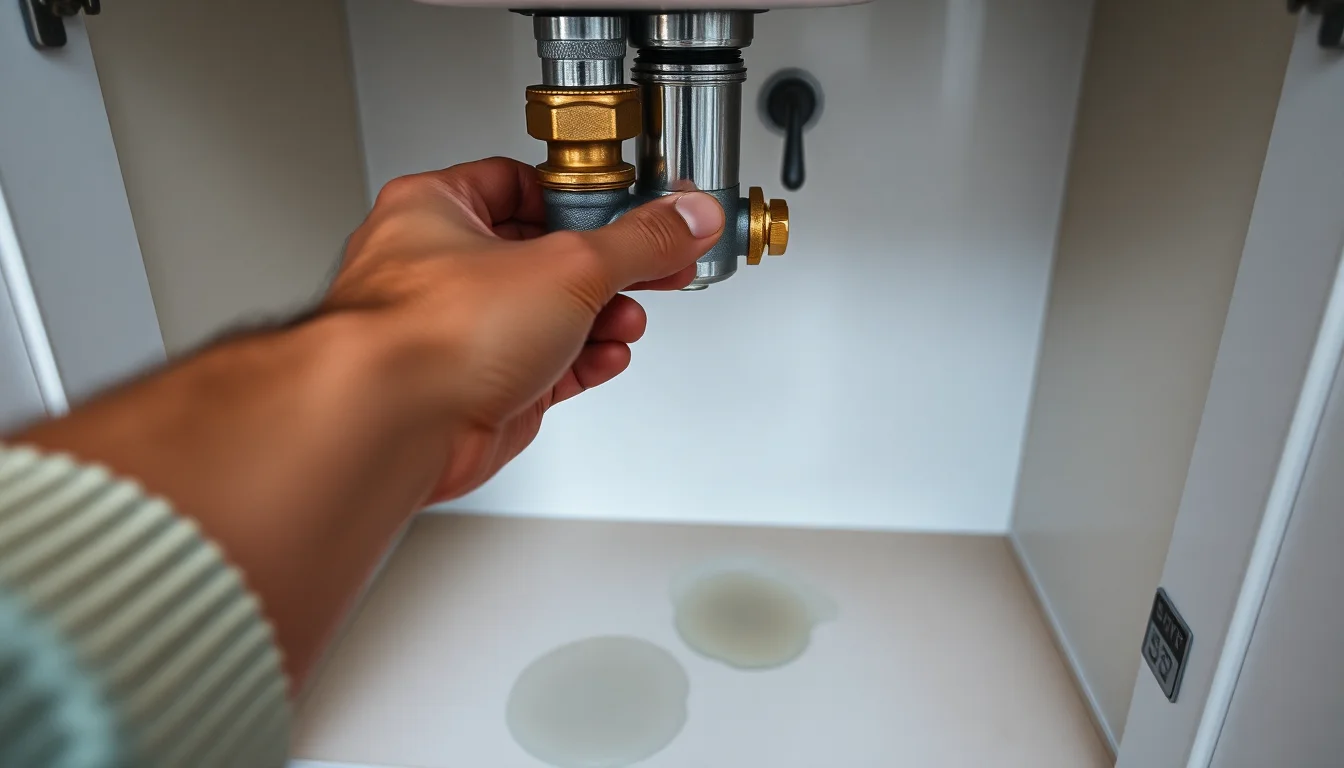
Head straight for the internal stopcock — in most homes it's under the kitchen sink, in a downstairs cloakroom, or close to the boiler. Turn it clockwise until it stops. If it's seized, stiff, or you simply can't find it in time, the external stopcock at the property boundary, or the water company's own valve nearby, will cut off the mains supply instead. Either way, isolating the water is the single most useful thing you can do before anyone arrives to help, because it stops the situation getting worse while everything else is sorted out.
Electrics Before Anything Else
Water finding its way towards sockets, switches or light fittings is a safety issue before it's a plumbing one. If that's happening, go to the consumer unit and switch off the affected circuit, or the main switch if you're not sure which one it is. Don't touch switches, plugs or appliances with wet hands, and leave the power off until it's been checked rather than guessing it's fine to switch back on.
Limiting the Damage While You Wait
With the water isolated, move furniture, electronics and anything valuable away from the wet area. Buckets, towels and a wet-vac if you have one will deal with what's already down. If water is pooling badly, opening a downstairs external door can help it drain away, as long as it isn't just moving the problem into a neighbouring property. A ceiling that's visibly bulging or bubbling is carrying trapped water and can be genuinely heavy — don't pierce it yourself; put something underneath to catch drips and leave the rest to whoever attends.
Why Basingstoke's Housing Age Matters Here
A lot of Basingstoke's homes date from the town's rapid growth as a London overspill new town through the 1960s, 70s and 80s — estates like Brighton Hill, Buckskin, Popley, Chineham and Hatch Warren were all built in that window. Pipework and stopcocks from that era are now several decades old, and joints in early copper or first-generation plastic pipe are more likely to fail with age or after a hard frost than anything installed more recently. Older properties around Old Basing and out towards Tadley, Overton and Whitchurch can have their own quirks too — a stopcock tucked somewhere less obvious, or pipe materials that predate the town's expansion altogether. None of that changes the first steps above, but it's worth knowing your own property's likely age and layout before you're standing in an inch of water trying to remember where anything is.
What Actually Counts as an Emergency
Not every drip needs an urgent response. A slow leak under a sink that's collecting a small amount of water over an hour, isn't spreading towards anything electrical, and isn't getting worse can usually wait for a normal appointment. Water that's actively spraying or flooding a room, a ceiling that's sagging or leaking, or water reaching anything electrical is a different matter and worth treating as urgent. If in doubt, isolating the water costs you nothing and buys time either way.
After the Water's Off: What Comes Next
Once things are safe, photograph the damage — walls, floors, ceilings, anything ruined — before you start clearing up, since this is what an insurer will ask for. Note what you did and when, such as when the stopcock and any power went off, as part of that record. Then it's a matter of finding the actual cause, whether that's a failed joint, frost damage, or a worn pipe, rather than just dealing with the immediate leak — our emergency plumbing team covers exactly that, including specific burst pipe and flooding callouts. If drains or sewage are part of what you're dealing with alongside the leak, our guide on emergency drain problems and what to do before the engineer arrives covers the immediate steps for that side of things too.
Get in touch through our online contact form once the immediate danger is dealt with, and we'll help you sort out what's actually gone wrong.
Frequently Asked Questions
**Where is my stopcock likely to be?** Most commonly under the kitchen sink, in a downstairs cloakroom, or near the boiler, though older properties around Basingstoke's villages can have it somewhere less obvious. If you can't find it quickly during an actual emergency, the external stopcock at the property boundary is the fallback.
**What should I do if I can't find the stopcock?** Look for the external stopcock, usually under a small cover near the property boundary or pavement edge, or the water company's own isolation valve nearby. Turning either of these off will cut the mains supply even if the internal one can't be located in time.
**Is a dripping pipe an emergency?** Not usually, if it's a small, contained drip that isn't near electrics and isn't getting worse — that can typically wait for a normal appointment. Water that's actively spraying, flooding a room, or reaching a socket or light fitting is a different situation and worth treating urgently.
**Should I turn off the electricity during a flood?** Yes, if water is anywhere near sockets, switches or light fittings — go to the consumer unit and switch off the affected circuit, or the main switch if you're unsure. Never touch anything electrical with wet hands, and leave the power off until it's been checked.
**Do you offer an emergency plumber near me in Basingstoke?** Yes — we cover emergency plumbing across Basingstoke and the surrounding villages. Get in touch through our online contact form and describe what's happening so we can advise on next steps.