TL;DR
A Saniflo or macerator unit pumps waste away from a toilet, shower room or utility WC that sits below, or too far from, the main gravity drain, which is exactly why they turn up so often in Basingstoke. The town's rapid growth as a 1960s-80s London overspill new town left a lot of ground-floor extensions, converted garages and garden rooms added long after the original drainage was laid, and a macerator is usually the practical way to plumb a WC into one. Routine servicing — checking the cutting blade, the non-return valve, seals and the float switch — catches wear before it becomes a jammed, leaking or failed unit, and it's a different visit to an emergency callout for something that's already stopped working. To book a service or ask a question, use our online contact form.
Why Macerator Toilets Are So Common Across Basingstoke
Basingstoke expanded fast from the 1960s through the 1980s under London overspill agreements, and estates such as Brighton Hill, Buckskin, Popley and Hatch Warren were built at pace to house it. Original drainage in these estates was laid out to serve the house as designed, which rarely included a downstairs WC in a rear extension, a shower room in a converted garage, or a home office with a WC in a garden building. When a homeowner adds one of these decades later, running a new gravity pipe back to the stack or the sewer connection often means digging up a driveway, patio or floor slab that was never designed to be disturbed.
A Saniflo or macerator unit avoids that. It grinds waste and pumps it, under pressure, through narrow-bore pipework that can run horizontally or even slightly uphill to reach the existing stack. That's why they turn up disproportionately often in the kind of add-on rooms that are so typical of Basingstoke's estate housing, as well as in older properties around Old Basing and the town's outlying villages, where a similar retrofit problem exists in older buildings instead of newer extensions.
Why Servicing Matters, Not Just Repairs
A macerator is a mechanical, electrically powered unit doing a job gravity can't, so when it fails, the room it serves stops working completely. A handful of wear points cause most of the trouble if left unchecked:
- The **cutting blade** can be dulled or jammed by anything fibrous that shouldn't have gone through it — wipes, cotton buds, sanitary products.
- The **non-return valve** can wear or become obstructed, allowing odour to travel back up the discharge line or, in the worst case, waste to flow the wrong way.
- **Limescale and mineral deposits** build up inside the chamber over time, particularly given the moderately hard water typical of this part of Hampshire, adding strain to the motor and pump.
- **Seals and gaskets** degrade with age, which is usually how a small leak starts around the base of the unit rather than anywhere more obvious.
A routine service exists to catch these before they become the reason the WC stops working on a Sunday evening.
What a Routine Service Visit Covers
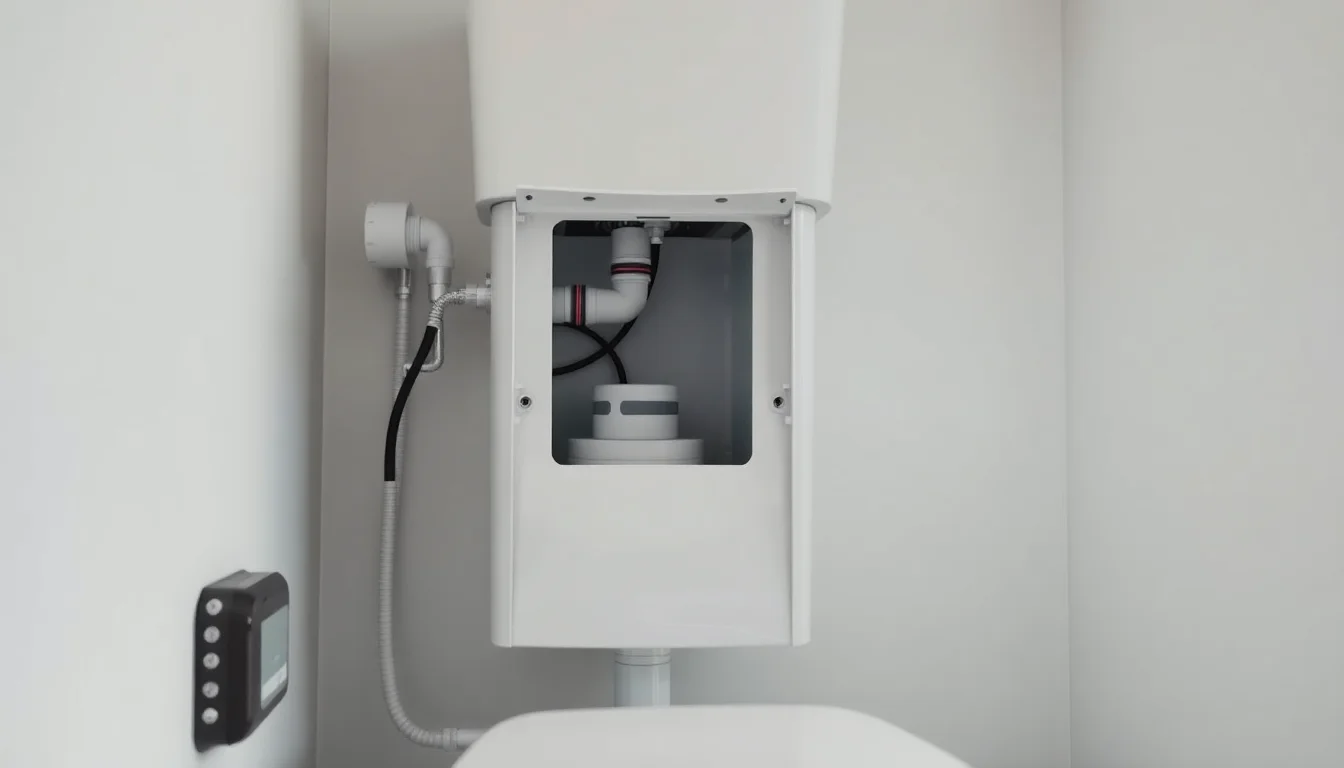
A service is planned maintenance on a unit that's still working, not a diagnosis of one that's already failed. A typical visit includes a visual check of the casing, pipework and mounting for any early signs of wear or leaks; opening the unit to inspect the cutting mechanism and clear anything caught in it; checking the non-return valve seats correctly; testing the float switch or microswitch that starts and stops the pump; and a flush-through to confirm flow and pump performance are as expected. Anything close to the end of its working life gets flagged so it can be planned for, rather than waiting for it to fail.
Service or Fault: Knowing Which One You Need
It's worth being clear about the difference, because it changes how urgently you need to act.
Signs a service is sensible, with the unit still working: a gradually louder hum during the flush cycle, the pump running slightly longer than it used to before cutting out, or a faint smell that clears after flushing.
Signs of an active fault, where the unit has stopped working properly: the bowl not clearing and water rising instead, grinding or screeching that wasn't there before, visible water around the unit or its pipework, or the motor not starting at all. If your unit is already humming without flushing, that's an active fault rather than a servicing job, and our Saniflo and macerator repair service is the right starting point — this article is about staying ahead of that point, not diagnosing it once it's happened.
Everyday Habits That Protect the Unit Between Services
A few simple habits go a long way: only flush human waste and toilet paper, keeping wipes, cotton buds and sanitary products out of the bowl entirely; use mild, non-abrasive cleaning products rather than harsh descalers that can degrade seals over time; and don't ignore a change in noise or flush time, since that's usually the earliest warning a service is due. None of this replaces a proper service, but it reduces how hard the unit has to work between them.
How Often Servicing Makes Sense
There's no single interval that suits every household — it depends on how the unit is used and how many fixtures rely on it. A macerator serving a single, moderately used WC needs less frequent attention than one supporting a shower room, en-suite or utility sink as well, or one in a property that sees a lot of guests. Rather than working to a fixed date, it's more reliable to watch for the early signs above and book a service when they appear. If you're not sure what's sensible for your property, get in touch through our contact form and we can advise based on how the unit is actually used.
Frequently Asked Questions
**How often should a Saniflo be serviced?** It depends on usage rather than a fixed interval — a unit serving a single WC with light use needs less frequent attention than one supporting a shower room or en-suite as well. Watching for early signs like a louder hum or longer pump run-time is a more reliable guide than working to a calendar date.
**Is a Saniflo service the same as a repair?** No. A service is planned maintenance carried out on a unit that's still working, aimed at catching wear before it causes a failure. A repair is what's needed once a unit has already stopped working properly — for example, not flushing, leaking, or failing to start.
**Can I service a Saniflo myself?** Some day-to-day care is straightforward, such as only flushing appropriate waste and avoiding harsh chemical descalers. Opening the unit to check the cutting mechanism, valve and seals is best left to a professional, since incorrect reassembly can cause leaks or further damage.
**What happens if a Saniflo is never serviced?** Left unchecked, wear in the cutting blade, non-return valve or seals tends to progress until the unit fails outright — usually as a blockage, a leak, or the pump not starting. Catching these issues at a service is generally more straightforward than dealing with a unit that has already stopped working.
**Do you service Saniflo units near me in Basingstoke?** Yes — we cover Saniflo and macerator servicing and repair across Basingstoke, including estates such as Brighton Hill, Buckskin, Popley and Hatch Warren, as well as Old Basing and the surrounding area. Get in touch through our contact form with your postcode and we'll confirm coverage.